
Hydration Wins Championships
Elite athletes understand a fundamental truth: optimal hydration and electrolyte balance are the pillars of peak performance. At Athleticfuelingzone, we guide you through the science and practice of maintaining perfect fluid equilibrium during every workout, competition, and recovery phase.
Whether you're training in tropical Indonesia or competing at high altitude, the principles remain the same—but the application must be precise. Discover how to fuel your body for success.
Why Hydration Matters in Sport
Of Athletic Performance
depends on optimal fluid balance during competition and training sessions
Dehydration Threshold
A loss of just 2-3% body weight in fluids noticeably reduces endurance capacity
Critical Electrolyte
Regulates fluid retention and muscle function during intense physical exertion
Optimal Hydration Window
The ideal time to consume electrolytes during endurance events lasting over an hour

The Science Behind Electrolyte Balance
Electrolytes are minerals that carry electrical charges in your body—sodium, potassium, calcium, and magnesium. During intense physical activity, you lose these minerals through perspiration, which disrupts cellular function, muscle contractions, and cognitive performance. Simply drinking water isn't enough; you need the right electrolyte ratio to maintain homeostasis.
The role of sodium extends beyond thirst regulation. It maintains blood osmolarity, enables muscle contraction, and preserves blood volume during extended exercise. Without sufficient sodium intake during endurance events, athletes risk hyponatremia—a dangerous condition where blood sodium concentration drops too low, potentially causing confusion, fatigue, and severe performance degradation.
Potassium works synergistically with sodium to regulate nerve signals and muscle function. Calcium supports muscle contraction mechanics, while magnesium enables energy production at the cellular level. Together, these electrolytes form the foundation of athletic endurance and recovery.
Read Full GuideEssential Hydration Strategies for Athletes
Pre-Hydration Protocol
Start your training session fully hydrated by consuming 400-600 ml of electrolyte-enhanced fluid 2-3 hours before activity. This gives your body time to absorb fluids and establish baseline hydration status before physical stress begins.
Timing matters: hydrating too close to exercise can cause stomach discomfort, while hydrating too early may result in urination before activity begins.
During-Exercise Fueling
For activities lasting over 60 minutes, consume 150-250 ml of electrolyte solution every 15-20 minutes. The presence of sodium and carbohydrates enhances fluid absorption in the small intestine and maintains blood glucose levels simultaneously.
Individual sweat rates vary dramatically based on genetics, fitness level, environmental conditions, and exercise intensity. Personalize your intake based on body weight loss during training.
Post-Exercise Recovery
Within 30 minutes of exercise completion, consume fluids with sodium and carbohydrates to accelerate rehydration and glycogen replenishment. This window is critical for muscle repair and adaptation signaling.
Drink approximately 150% of fluid lost during exercise over the next 4-6 hours. The extra 50% accounts for ongoing urinary losses and ensures complete rehydration status restoration.
Athletes in Action: Hydration in Practice
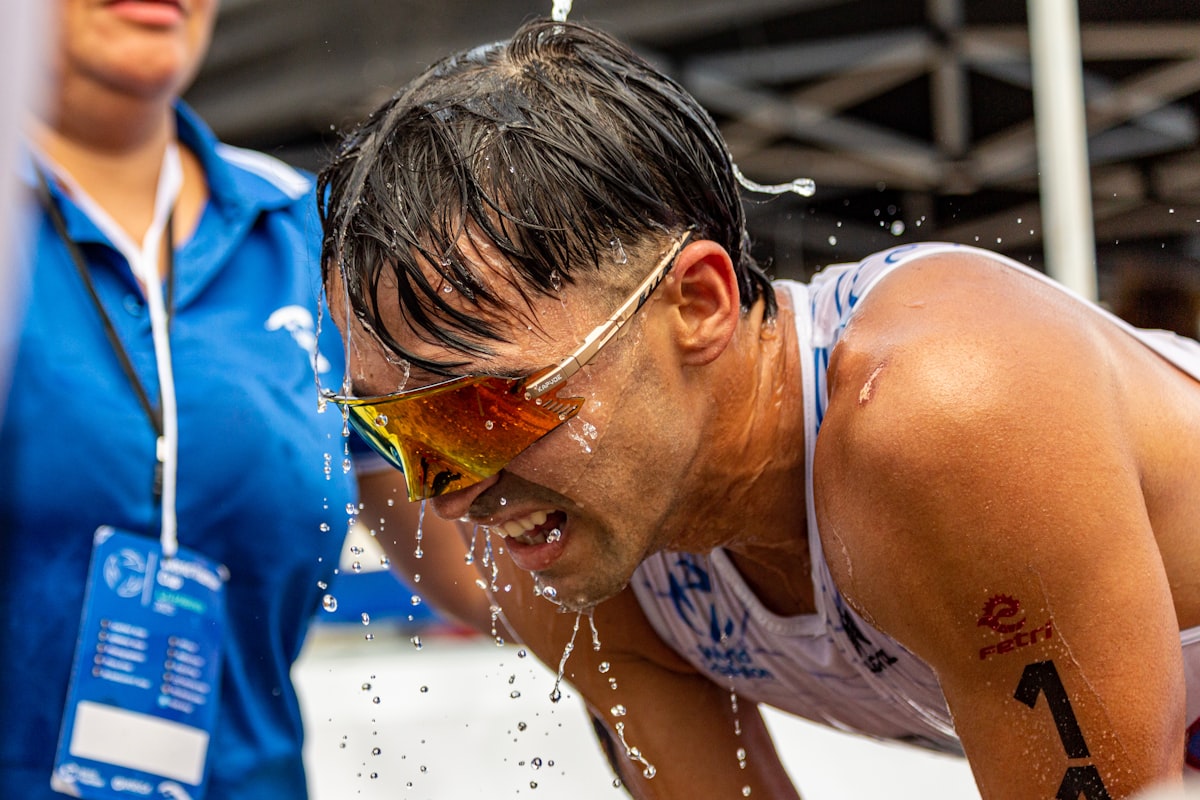
Marathon Hydration Strategy

Cycling Endurance Fueling

Post-Match Recovery Fluids

Hot Climate Training Adaptation
Aquatic Sport Hydration
Team Sports Recovery Protocol
Why Choose Athleticfuelingzone
Our editorial platform brings together the latest sports science research with practical, actionable guidance specifically tailored for athletes training in diverse environmental conditions.
Evidence-Based Information
Every article and guide is grounded in peer-reviewed sports science research. We translate complex physiological concepts into practical strategies you can implement immediately.
Climate-Specific Guidance
Indonesia's tropical climate presents unique hydration challenges. Our content addresses high humidity, intense heat, and intense UV exposure—conditions that dramatically alter sweat rates and electrolyte loss patterns.
Community of Athletes
Join a growing network of serious athletes, trainers, and coaches who prioritize optimal hydration. Share experiences, ask questions, and learn from documented case studies of performance optimization.
Performance Tracking Frameworks
Learn how to systematically measure your hydration status, track sweat rates, and adjust intake protocols based on quantifiable performance metrics and body composition changes.
Comprehensive Article Library
Access detailed guides covering everything from basic hydration principles to advanced electrolyte formulation science, altitude training adaptations, and sport-specific protocols.
Expert Editorial Team
Our writers include exercise physiologists, sports nutritionists, and elite-level coaches with decades of combined experience optimizing athlete performance across multiple disciplines.
Frequently Asked Questions About Hydration
General recommendations suggest 35-40 ml per kilogram of body weight daily for sedentary individuals. However, athletes require significantly more—typically 50-100 ml per kilogram depending on training volume, intensity, environmental conditions, and individual sweat rates. A 70 kg athlete training intensely might require 3.5-7 liters daily. The best approach is to monitor urine color (pale yellow indicates adequate hydration) and adjust intake based on body weight changes during and after training sessions.
Research consistently supports 20-30 millimoles of sodium per liter (460-690 mg/liter) for optimal fluid absorption and retention during exercise. This concentration matches the osmolarity of blood plasma, enabling rapid intestinal absorption and reducing gastrointestinal distress. Lower sodium concentrations may result in slower hydration, while excessively high sodium can cause nausea and cramping. For activities lasting longer than 90 minutes, sodium intake should increase proportionally with carbohydrate content to maximize both energy availability and fluid retention.
Yes—consuming excessive plain water without electrolyte replacement during prolonged exercise can dilute blood sodium concentration below safe levels, causing hyponatremia. This condition disrupts cellular function, impairs cognitive performance, and in severe cases, causes brain swelling. The risk increases significantly during ultra-endurance events lasting over 4-5 hours. Prevention requires consuming sodium-containing fluids regularly throughout extended exercise, limiting total fluid intake to match sweat losses (approximately 150% of body weight loss over 4-6 hours post-exercise), and respecting individual thirst signals.
Sweat rate calculation requires systematic measurement: 1) Weigh yourself nude before exercise, 2) Complete a standardized 60-minute workout in representative conditions, 3) Weigh yourself again immediately after (without clothing), 4) Calculate the difference in kilograms, 5) Add any fluid consumed during exercise (in liters converted to kg), 6) This total represents your sweat rate per hour. For example, if you lost 1.2 kg, consumed 500 ml (0.5 kg), your sweat rate is approximately 1.7 liters per hour. Repeat this test in different environmental conditions and at various exercise intensities, as sweat rates vary significantly across contexts.
For activities under 60 minutes at moderate intensity, plain water typically suffices for most athletes in temperate climates. However, in hot, humid environments (like Indonesia) or during high-intensity efforts where sweat rates exceed 1-1.5 liters per hour, adding sodium and carbohydrates even to shorter sessions can enhance performance and prevent excessive dehydration. Individual factors including fitness level, genetics, acclimatization status, and ambient conditions all influence whether supplementation becomes necessary. Elite athletes in tropical climates often benefit from electrolyte intake even during shorter training sessions.
Heat acclimatization—typically achieved through 10-14 days of progressive training in hot conditions—improves thermoregulation and reduces core temperature during exercise. This adaptation increases plasma volume, shifts sweating onset to lower temperatures, and enables more efficient sweat distribution. Consequently, acclimatized athletes require less total fluid intake to maintain performance in hot environments. However, absolute sweat rate may remain high; the improvement comes from enhanced temperature regulation rather than reduced fluid loss. This underscores the importance of systematic acclimatization protocols before competing or training intensely in unfamiliar hot climates.
What Elite Athletes and Coaches Say
"Athleticfuelingzone completely transformed how I approach hydration during my ultra-marathon training. Understanding my individual sweat rate and adjusting electrolyte intake accordingly added nearly 45 minutes to my endurance capacity. The climate-specific guidance for tropical conditions was exactly what I needed training here in Yogyakarta."
— Budi Santoso, Ultra-Marathon Runner
Jakarta, Indonesia
"I was consistently hitting a performance wall around 90 minutes into my cycling events. After implementing the during-exercise fueling protocols from this site, my energy levels remained stable throughout 3+ hour rides. The science-backed approach gave me confidence that I wasn't just guessing about my hydration strategy anymore."
Siti Rahmadhani
Bandung, Indonesia
"As a futsal coach managing a team in humid Surabaya conditions, the post-exercise recovery protocols have been game-changing. My players recover faster between matches, report fewer cramps, and maintain better focus during tournament play. The team hydration strategy article helped us implement systematic protocols that measurably improved performance."
Ahmad Wijaya
Surabaya, Indonesia
"Training for my first marathon while living in Medan felt overwhelming until I discovered Athleticfuelingzone. The step-by-step hydration protocol adapted for hot climates made everything click. I finished my first marathon feeling strong, and I'm convinced proper hydration strategy made the biggest difference in my finishing time."
Eka Putri Wijayanti
Medan, Indonesia
Your Hydration Optimization Journey
Assess Your Current Hydration Status
Begin by measuring your body weight before and after a representative training session to calculate your individual sweat rate. Document environmental conditions (temperature, humidity) and exercise intensity. This baseline measurement is essential for personalized protocol development and reveals whether your current fluid intake matches your physiological losses.
Learn Electrolyte Science and Application
Study the evidence-based guidance covering sodium's role in fluid retention, potassium's contribution to muscle function, and calcium and magnesium's importance for energy production. Understand how electrolyte requirements scale with exercise duration, intensity, and environmental conditions. This knowledge empowers you to design informed strategies rather than following generic recommendations.
Implement Sport-Specific Hydration Protocols
Apply the principles to your specific discipline—whether marathon running, cycling, team sports, or swimming. Review the detailed protocols for pre-hydration, during-exercise fueling, and post-exercise recovery. Start with conservative intake recommendations and adjust based on performance data, gastrointestinal tolerance, and body weight changes during training.
Monitor, Measure, and Continuously Optimize
Track performance metrics (completion time, perceived exertion, energy levels, recovery quality) in relation to your hydration strategy. Repeat sweat rate calculations monthly or when training conditions change significantly. Adjust electrolyte concentrations, timing, and total fluid volume based on documented results. This iterative process reveals your optimal hydration formula across diverse conditions.
Ready to Master Your Hydration Strategy?
Explore our comprehensive guides, learn from detailed case studies, and join a community of serious athletes committed to optimizing every aspect of their performance. Whether you're training for your first 5K or pushing toward elite-level competition, proper hydration is the foundation.
What Athletes Are Saying
Real stories from real competitors who transformed their performance through strategic hydration.
"I used to hit the wall at mile 18 in marathons. After implementing the hydration protocols from Athleticfuelingzone, I PR'd by 12 minutes. The science-backed approach made all the difference."
"As a competitive cyclist, dehydration was costing me watts on climbs. The personalized hydration strategy reduced my DNFs and improved my power output by 8%."
"Recovery time improved dramatically when I optimized my hydration. I went from 48 hours to 24 hours between hard workouts. This resource is invaluable."
Frequently Asked Questions
Everything you need to know about athletic hydration and performance optimization.
How much water should I drink during exercise?
Is electrolyte replacement necessary for all workouts?
Can over-hydration be harmful?
How do I know if I'm adequately hydrated?
What's the best recovery hydration strategy?
Unlock Your Athletic Potential Today
Join thousands of athletes using science-backed hydration strategies to achieve their performance goals. Start your free consultation with our experts.